




Joint discomfort can affect everyday activities such as walking, climbing stairs, exercising, or getting up after sitting for a long time. Alongside appropriate medical care, some people explore herbal drinks as part of their everyday food and wellness routine.
Green tea, ginger tea, and turmeric-based drinks are often discussed because their plant compounds have been studied for antioxidant or anti-inflammatory activity. However, there is currently no reliable basis for saying that a particular cup of herbal tea can cure arthritis, eliminate joint pain, or replace medical treatment.
This guide explains what to know about tea for joint pain, how commonly discussed herbs differ, what research says, and how to evaluate a multi-ingredient herbal tea responsibly.
Can Herbal Tea Help With Joint Pain?
Herbal tea may be enjoyed as a warm beverage within a balanced lifestyle, but it should not be considered a proven treatment for joint pain.
Some herbs contain compounds that researchers have investigated for their possible effects on inflammation. However, laboratory findings, supplement studies, and research on concentrated extracts do not automatically establish that drinking the same ingredient as a tea produces the same effects.
Joint pain can have several causes, including osteoarthritis, rheumatoid arthritis, injuries, overuse, and other medical conditions. The right approach depends on the cause.
A sensible way to think about herbal tea is as an optional beverage—not a substitute for diagnosis, prescribed medication, physiotherapy, or an appropriate treatment plan.
What Is an Anti-Inflammatory Herbal Tea?
An anti-inflammatory herbal tea is a beverage made with plant ingredients that contain compounds being studied for their potential effects on inflammatory processes.
Commonly discussed ingredients include:
- Green tea, which contains polyphenols such as EGCG.
- Ginger, which contains naturally occurring gingerols and related compounds.
- Turmeric, which contains curcumin.
- Other culinary herbs and spices used in traditional food and beverage preparations.
The term “anti-inflammatory” should be used carefully. A compound showing activity in laboratory research does not prove that a brewed tea reduces inflammation in the human body or relieves a particular joint condition.
The amount of an active compound in a cup also depends on the ingredient, its quality, the quantity used, and the preparation method.
Which Teas Are Commonly Discussed for Joint Health?
There is no universally proven best tea for joint pain. The following beverages are discussed because their ingredients have attracted scientific or traditional interest. They should not be treated as equivalent to clinically tested treatments.
1. Green Tea
Green tea comes from the leaves of Camellia sinensis. It contains naturally occurring polyphenols, including epigallocatechin gallate (EGCG).
Researchers have studied green tea compounds in relation to oxidative stress and inflammatory processes. One clinical study investigated green tea in people with knee osteoarthritis and reported some improvements in selected outcome measures. However, the researchers also noted the need for larger and longer studies.
Importantly, that research does not establish that every green tea beverage—or a multi-herb tea containing green tea—will produce the same result.
What to know: Green tea is a familiar beverage, but it contains caffeine. People who are sensitive to caffeine should consider their overall intake and the time of day they drink it.
2. Ginger Tea
Ginger is a commonly used culinary spice. Its naturally occurring compounds, including gingerols, have been studied for various biological effects.
Some research has examined ginger supplements in people with osteoarthritis. However, evidence about whether ginger supplementation meaningfully helps joint symptoms remains uncertain, and supplement findings cannot simply be applied to homemade ginger tea.
A cup of ginger tea can be enjoyed as a warm, spicy beverage. It should not be presented as a proven remedy for arthritis or joint inflammation.
What to know: Ginger can cause heartburn, abdominal discomfort, or other digestive side effects in some people. Ask a healthcare professional or pharmacist before using ginger products regularly for a health purpose if you take medication.
3. Turmeric Tea
Turmeric (Curcuma longa) is a familiar ingredient in Indian cooking. It contains curcumin, a compound that has been investigated for its biological and anti-inflammatory properties.
Research into turmeric and curcumin supplements has produced mixed findings. Evidence about supplements does not demonstrate that a normal cup of turmeric tea has the same effects, because the quantity and absorption of curcumin can differ considerably.
Turmeric can be used in a warm beverage for its flavour and colour, but the drink should not be described as a treatment for joint pain.
What to know: People taking regular medication or managing a health condition should seek professional advice before using concentrated turmeric products or supplements. Culinary use and high-dose supplements are not interchangeable.
4. Peppermint and Spearmint Tea
Peppermint and spearmint are aromatic plants commonly used in herbal beverages.
They can contribute a fresh flavour to tea blends. However, the presence of mint in a product does not establish that it reduces joint pain or treats inflammation.
What to know: Consider individual tolerance, allergies, and any relevant health conditions when choosing a herbal blend.
5. Other Botanical Ingredients
Herbal blends may also contain ingredients such as aloe vera, coriander, black sesame, lemongrass, black pepper, and ashwagandha.
Each ingredient has its own traditional uses, chemical composition, possible side effects, and research limitations. Their inclusion in one blend does not establish that the finished beverage has a clinically proven effect on joint health.
Before choosing a multi-ingredient tea, review the complete ingredient list and ask a qualified healthcare professional whether it is appropriate for your circumstances.
What Does Scientific Research Say About Herbal Tea and Joint Pain?
Research into herbs and joint health is ongoing, but the evidence needs to be interpreted carefully.
The National Center for Complementary and Integrative Health (NCCIH) explains that there is not enough evidence to support many nutritional approaches for musculoskeletal inflammation. It also notes that the evidence for ginger supplements in osteoarthritis and the evidence for turmeric supplementation in inflammatory conditions are uncertain or insufficient.
A clinical study of green tea in people with knee osteoarthritis reported improvements in some selected measures. However, one study is not enough to establish the effectiveness of ordinary green tea or a different multi-ingredient formulation.
It is important to distinguish between four types of information:
| Type of information | What it means |
|---|---|
| Laboratory research | A compound is studied under controlled laboratory conditions |
| Supplement research | A concentrated or measured preparation is studied in people |
| Traditional use | An ingredient has a history of use in a particular culture |
| Tea consumption | A brewed beverage is consumed in an ordinary food or drink context |
These are not interchangeable. A result from a concentrated extract cannot automatically be used to make a claim about a cup of tea.
For this reason, herbal tea should be approached as a complementary lifestyle choice rather than a clinically established treatment for joint conditions.
Understanding Yoga Chaitanya Joint Pain Relief Herbal Tea
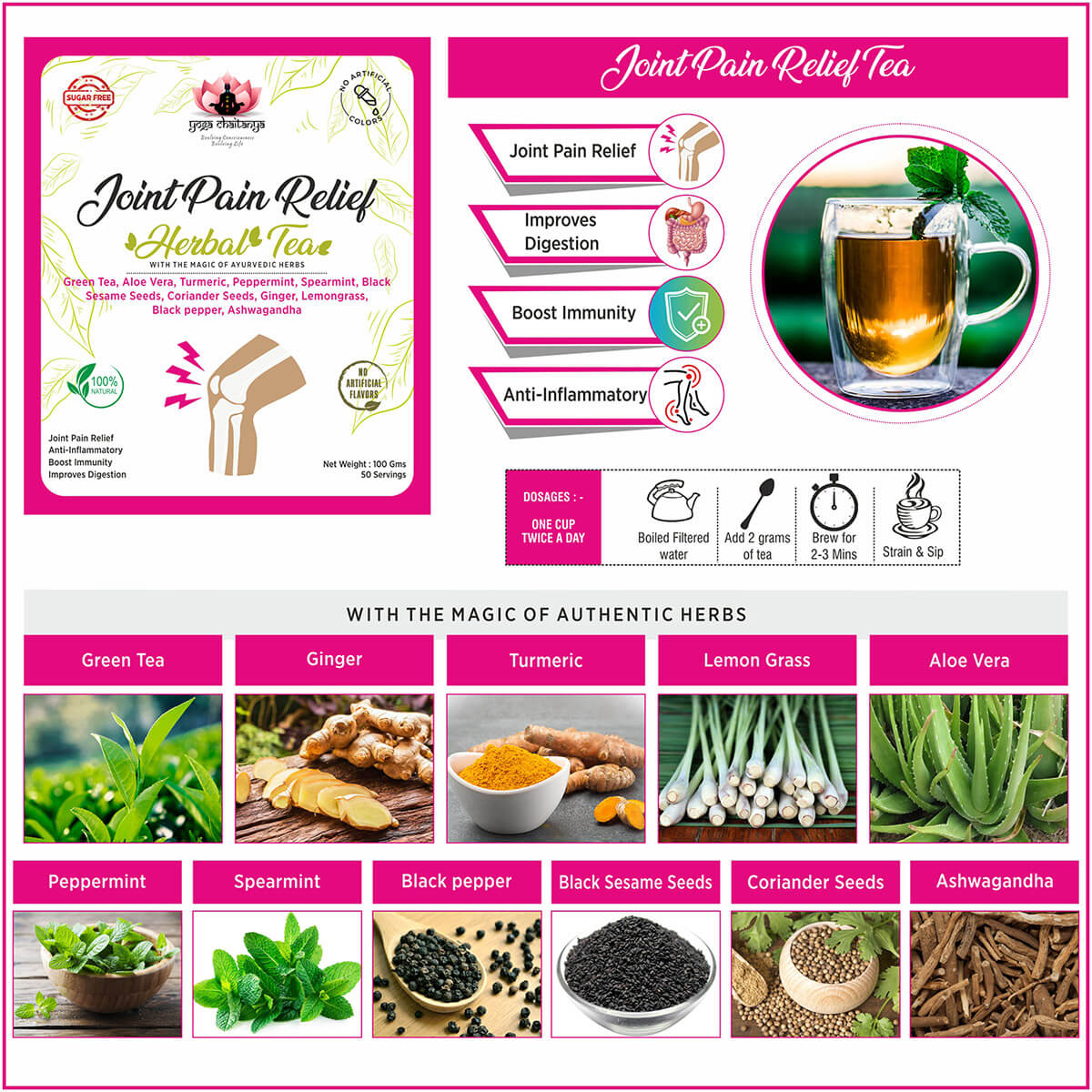
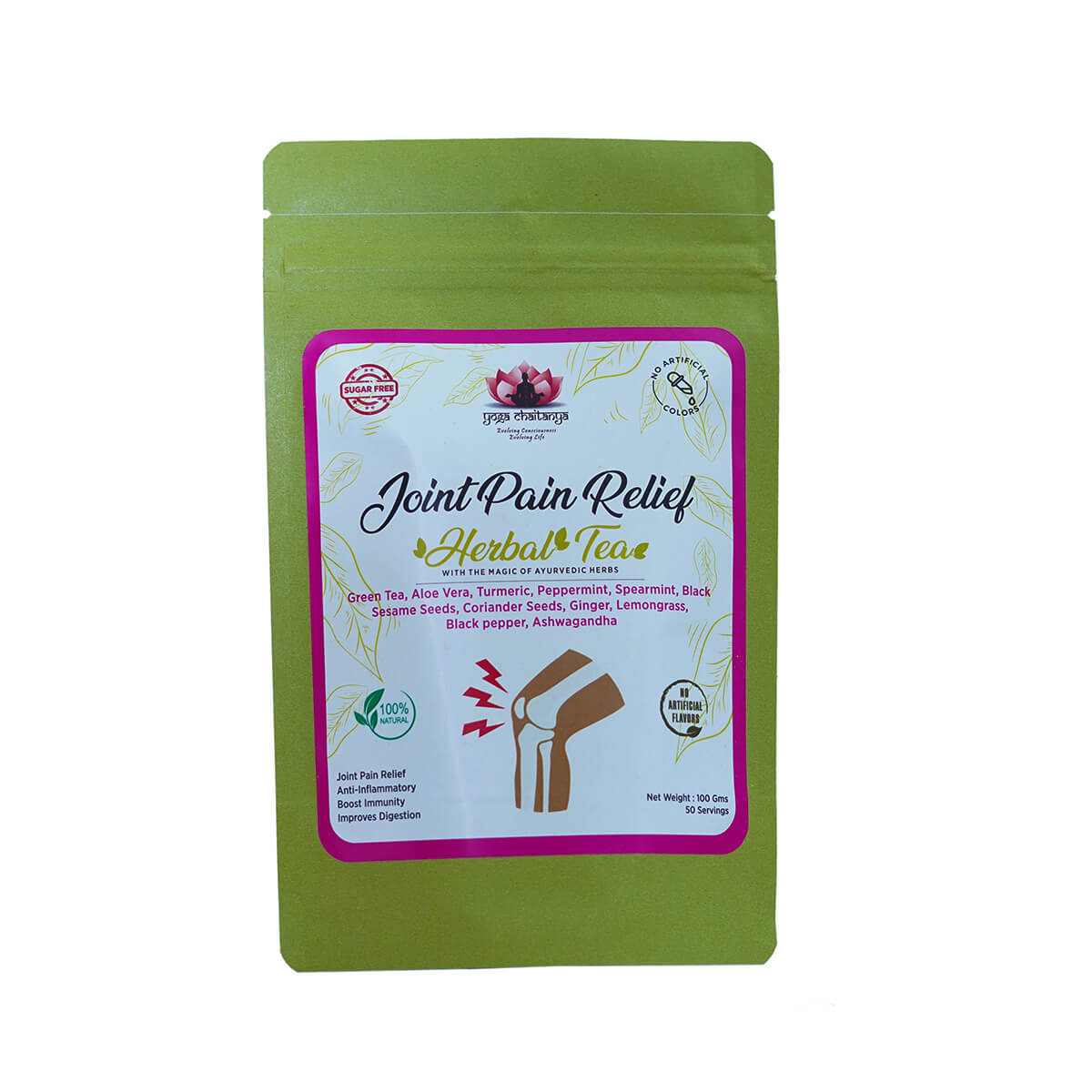
Yoga Chaitanya offers a product called Joint Pain Relief Herbal Tea. Its product page lists a blend of 11 botanical ingredients.
The published ingredient list is:
| Ingredient | Botanical or common description |
|---|---|
| Green tea | Camellia sinensis |
| Aloe vera | Aloe vera |
| Turmeric | Curcuma longa |
| Peppermint | Mentha × piperita |
| Spearmint | Mentha spicata |
| Black sesame seeds | Sesamum indicum |
| Coriander seeds | Coriandrum sativum |
| Ginger | Zingiber officinale |
| Lemongrass | Cymbopogon |
| Black pepper | Piper nigrum |
| Ashwagandha | Withania somnifera |
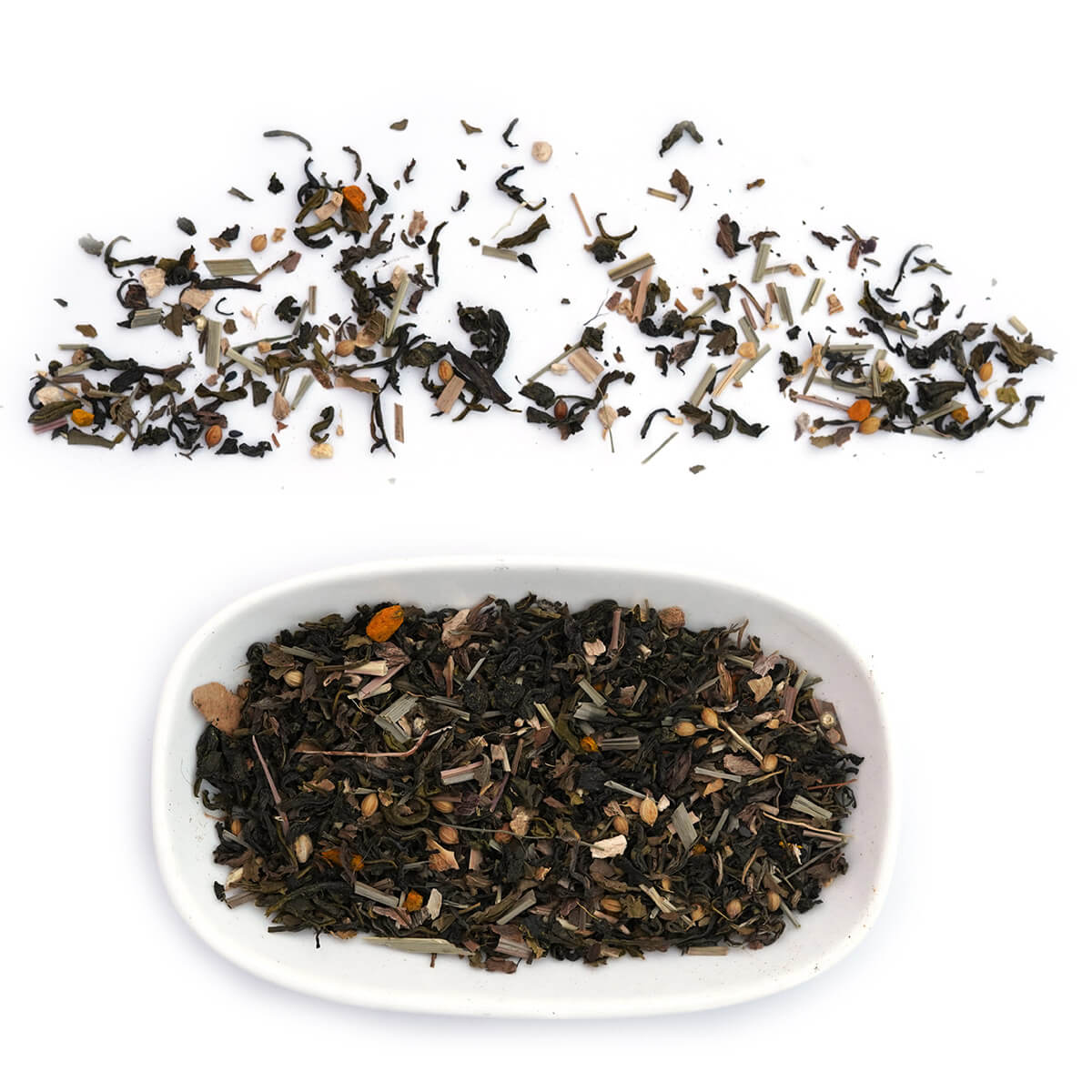
The blend combines tea leaves, herbs, seeds, and spices. Readers who are considering it should review the full formulation, especially if they have allergies, take medication, or have an existing health condition.
The product page also lists available pack sizes and current pricing. These details may change, so check the live product page before purchasing.
Explore the product details: Yoga Chaitanya Joint Pain Relief Herbal Tea
How to Prepare Yoga Chaitanya Joint Pain Relief Herbal Tea
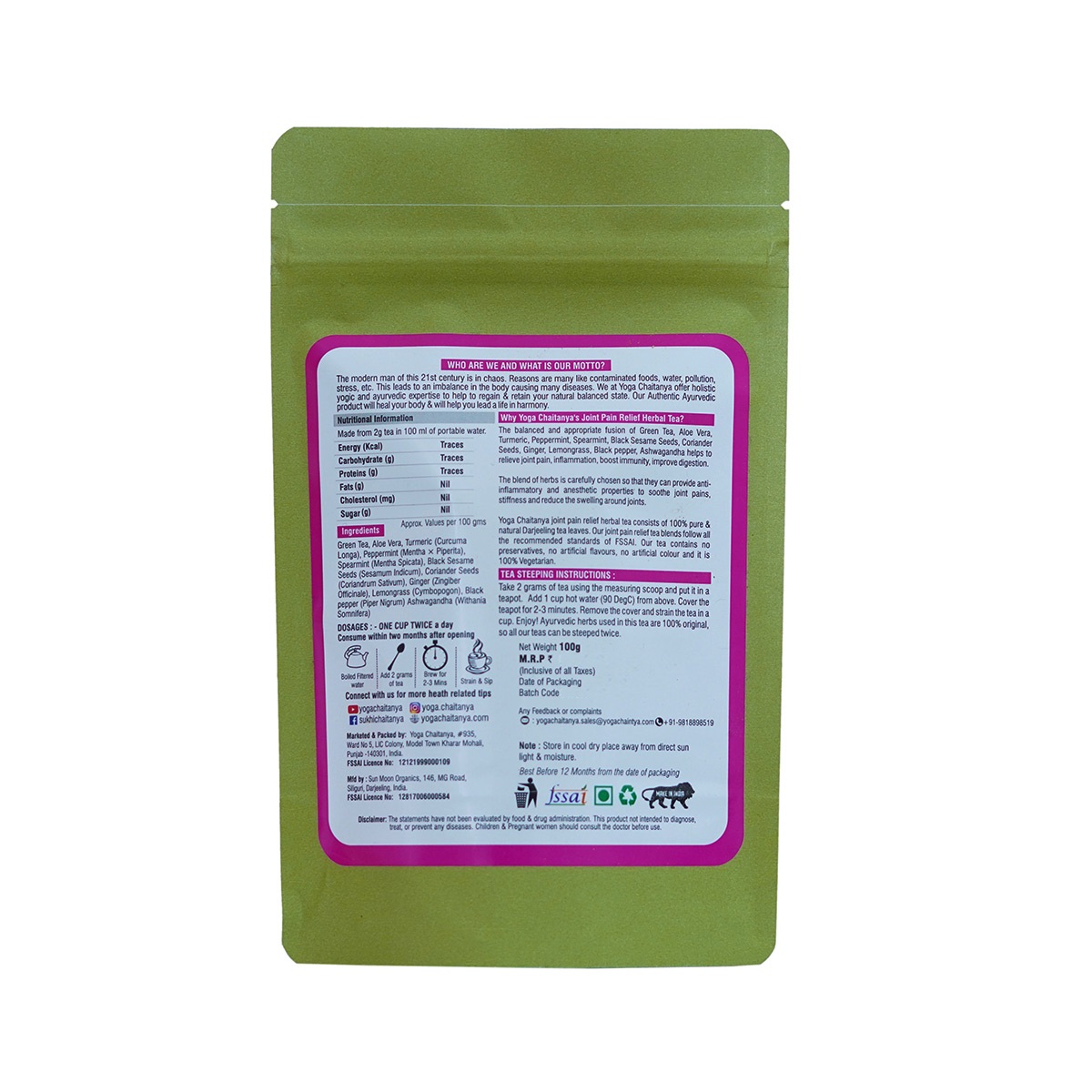
The product page publishes the following preparation instructions:
| Preparation detail | Published instruction |
|---|---|
| Tea quantity | 2–2.5 grams |
| Water quantity | 150–180 ml |
| Water temperature | Approximately 90°C |
| Steeping time | 2–3 minutes |
| Final step | Cover, steep, strain, and serve |
Preparation steps
- Measure 2–2.5 grams of the tea blend using the measuring scoop.
- Place the blend in a suitable teapot.
- Add 150–180 ml of hot water at approximately 90°C.
- Cover the teapot.
- Allow it to steep for 2–3 minutes.
- Strain the tea into a cup.
- Allow it to cool to a comfortable drinking temperature.
These are the preparation directions published for this specific product. They are not an independently established therapeutic dose or a recommendation that every person should consume the blend.
The product page also suggests a regular consumption schedule. Because the formulation contains multiple botanical ingredients and individual suitability can vary, readers should seek qualified professional advice before following a prolonged health-related consumption routine. Do not change prescribed treatment based on product instructions.
How to Choose a Herbal Tea for Joint Health
Choosing a herbal tea involves more than selecting a product with “joint relief” or “anti-inflammatory” in its name.
Use the following checklist before buying a blend.
1. Read the Complete Ingredient List
Check every ingredient rather than relying only on the product name or front-label claims. Look for ingredients that you may be allergic to or have been advised to avoid.
2. Check the Quantity of Each Ingredient
A product may list several herbs without clearly stating how much of each is present. If quantities are not provided, you may not be able to compare the formulation with a particular research preparation.
3. Review Preparation Instructions
A reliable product description should explain how much tea to use, how much water to add, the recommended water temperature, and the steeping time.
4. Look for Clear Safety Information
Check for relevant warnings, possible interactions, age restrictions, pregnancy-related precautions, and storage instructions.
5. Be Careful With Strong Medical Promises
Be cautious of claims that a tea cures arthritis, repairs cartilage, removes swelling, or guarantees pain relief. A product’s ingredient list or traditional use does not prove these outcomes.
6. Ask a Healthcare Professional When Necessary
If you have a diagnosed joint condition, take regular medication, are pregnant or breastfeeding, or have an ongoing health concern, discuss the formulation with a qualified healthcare professional before using it for a health purpose.
Everyday Habits That Support Joint Health
Herbal tea alone cannot address every factor associated with joint discomfort. General health habits and appropriate medical care remain important.
Depending on the cause of the discomfort and your individual circumstances, useful habits may include:
- Stay physically active: Choose appropriate movement and exercise based on your ability and professional advice.
- Follow a balanced diet: Include a variety of vegetables, fruits, whole grains, protein sources, and other nutritious foods.
- Maintain a comfortable body weight: If weight management is relevant to your health, seek practical and sustainable guidance.
- Pay attention to recovery: Allow time for rest and avoid repeatedly overloading a painful joint.
- Follow your care plan: Continue prescribed medication, physiotherapy, and clinical follow-up as advised.
If a movement causes significant pain or worsens your symptoms, stop and seek appropriate advice rather than pushing through it.
When Should You Seek Medical Advice for Joint Pain?
Joint pain should not automatically be attributed to ageing, exercise, or inflammation.
Consider medical assessment if pain persists, repeatedly returns, affects everyday activities, or is accompanied by other symptoms.
Seek urgent medical attention if a joint becomes suddenly very painful, hot, red, or significantly swollen, particularly if you also have a fever or feel unwell. These symptoms may require prompt assessment.
A healthcare professional can help identify the cause and recommend an appropriate treatment plan. Herbal tea should never delay an assessment or replace prescribed care.
Frequently Asked Questions About Tea for Joint Pain
1. Which tea is best for joint pain?
There is no single tea proven to relieve joint pain. Green tea, ginger tea, and turmeric tea are commonly discussed because their ingredients have been studied, but evidence from supplements or laboratory research does not prove that brewed tea treats joint conditions.
2. Is anti-inflammatory herbal tea effective for arthritis?
Some herbal ingredients contain compounds studied for their possible effects on inflammation. However, there is insufficient evidence to say that a particular herbal tea treats arthritis or reliably reduces its symptoms. Consult a healthcare professional about evidence-based treatment options.
3. Can I drink ginger tea for joint pain?
Ginger tea can be enjoyed as a beverage. Some studies have investigated ginger supplements for osteoarthritis, but those findings do not establish that a cup of ginger tea relieves joint pain.
4. Does turmeric tea help with joint inflammation?
Turmeric contains curcumin, which has been studied for its biological effects. However, evidence about turmeric supplements cannot automatically be applied to turmeric tea. It should be treated as a beverage, not a proven treatment for joint inflammation.
5. Is green tea good for joint health?
Green tea contains polyphenols such as EGCG. A clinical study has examined green tea in people with knee osteoarthritis, but further research is needed. The findings do not prove that ordinary green tea prevents or treats joint disease.
6. Can herbal tea replace arthritis medication?
No. Herbal tea should not replace prescribed medication, physiotherapy, or medical treatment. Speak with your healthcare professional before changing any part of your treatment plan.
7. What ingredients are included in Yoga Chaitanya Joint Pain Relief Herbal Tea?
The product page lists green tea, aloe vera, turmeric, peppermint, spearmint, black sesame seeds, coriander seeds, ginger, lemongrass, black pepper, and ashwagandha. Check the live product page for the current formulation and product information.
8. How do I prepare Yoga Chaitanya Joint Pain Relief Herbal Tea?
The published instructions specify 2–2.5 grams of tea in 150–180 ml of water at approximately 90°C. Cover and steep for 2–3 minutes, then strain. Follow the live product instructions and check suitability before use.
9. Can I drink herbal tea every day?
That depends on the ingredients, quantity, individual health, and medication use. A multi-herb blend should not automatically be assumed suitable for daily or prolonged consumption. Ask a healthcare professional if you are unsure.
10. Is joint pain always caused by inflammation?
No. Joint pain can have several causes, including injuries, osteoarthritis, rheumatoid arthritis, overuse, and other conditions. A healthcare professional can help determine the likely cause.
Final Thoughts: Choosing Tea for Joint Health Responsibly
Green tea, ginger, turmeric, and other botanical ingredients are often discussed in relation to joint health. Some contain compounds that researchers continue to investigate, but the evidence does not establish that a particular herbal tea can cure arthritis or reliably relieve joint pain.
If you enjoy herbal beverages, choose products with transparent ingredient information, clear preparation directions, and appropriate safety guidance. Consider your health conditions and medication use before choosing a multi-ingredient blend.
Yoga Chaitanya’s Joint Pain Relief Herbal Tea is one available blend containing 11 listed ingredients. Review its complete product information and consult a qualified healthcare professional if you are considering it for a health-related purpose.
View the product, ingredients, pack sizes, and current price: Joint Pain Relief Herbal Tea by Yoga Chaitanya
Health information disclaimer: This article is for general educational purposes and is not medical advice. Herbal teas are not substitutes for diagnosis or treatment. Speak with a qualified healthcare professional about persistent joint pain, medication interactions, or the suitability of herbal products.

Jaswant Singh –
Bought this product for joint pain due to Arthritis. After taking tea for two weeks have experienced noticeable relief.
Krishna Nand Thakur –
The product is too good. This is my second purchase as I consume it twice a day. I have been suffering from water retention of late and had several joints pain. I am a great fan of herbal teas so I thought of giving it a try and worked well.
Balram Rana –
These really help with my joint pain; I can tell a huge difference from when I take this tea. I highly recommend this tea.
Achyutam –
My mother had joint pain issues due to old age, but now she got relief from pain after using this tea
Achyutam –
got relief from pain after using this tea
Shashibala –
This tea really helped me with my joint pain. I’m very impressed & I recommend it everyone
Tarakesh Vaidyar –
This herbal tea is really helpful in joint pain or other pain also and it’s helpful for people have digestion problem and it does taste good not bitter at all thats why i enjoy drinking it. Go for it and take a step towards a healthy lifestyle
Sudhir Pande –
I’m 64 and have some knee problems, which have been largely reduced by use of this Tea so I’m a fan of this tea