
Ginger Tea for Cold Weather Comfort: A Simple Warming Drink
-
Written By: Sukhvinder Singh (Chaitanya)
- Published On:
- Last Updated: October 29, 2026
When cold weather arrives, a warm cup of ginger tea can make an ordinary morning or evening feel more comforting. Fresh ginger brings a naturally spicy, aromatic flavour to hot water, creating a simple drink that can be enjoyed on a chilly morning, after time outdoors, or as part of a relaxing evening routine.
Ginger tea for cold weather comfort is easy to prepare at home with fresh ginger and hot water. You can customise the flavour with lemon or a little honey, depending on your preferences. Although many people enjoy ginger tea during winter, it should be understood as a comforting beverage rather than a proven cure for a cold, flu, or other illness.
Whether you live through snowy winters in Canada, chilly mornings in the UK, seasonal cold spells in the United States, cooler evenings in Australia, or air-conditioned environments in Singapore and the Gulf region, a warm ginger drink can be adapted to your routine throughout the year.
Why Is Ginger Tea a Popular Cold Weather Drink?
Ginger tea combines the warmth of a hot beverage with the distinctive flavour of ginger. It is popular in many food traditions and can be prepared with just a few ingredients.
Here are some reasons people enjoy it:
Comforting warmth: A hot drink can feel soothing when the weather is cold.
Distinctive flavour: Ginger has a fresh, spicy taste that can be enjoyed on its own or balanced with lemon and honey.
Simple preparation: Fresh ginger and hot water are enough to make a basic infusion.
Flexible ingredients: You can adjust the strength and flavour to suit your preferences.
A relaxing daily ritual: Preparing a warm drink can create a quiet moment during a busy day.
Warm beverages also contribute to fluid intake. However, the comfort of drinking ginger tea should not be confused with proof that it prevents infections or treats the underlying cause of a cold.
Table of Contents
How to Make Ginger Tea for Cold Weather Comfort
Making ginger tea at home requires only a few minutes of preparation. The recipe below is a simple starting point; you can adjust the amount of ginger and steeping time according to your taste.
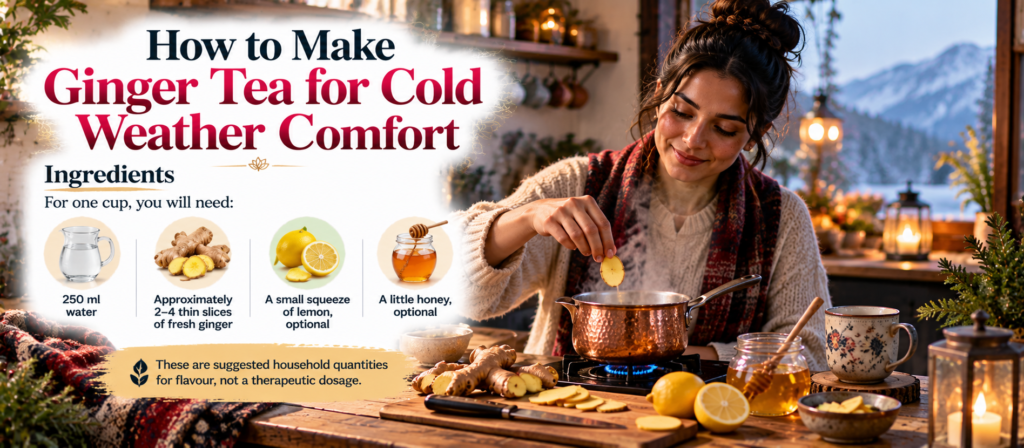
Ingredients
For one cup, you will need:
250 ml water
Approximately 2–4 thin slices of fresh ginger
A small squeeze of lemon, optional
A little honey, optional
These are suggested household quantities for flavour, not a therapeutic dosage.
Preparation method
Step 1: Prepare the ginger. Wash the fresh ginger thoroughly. Peel it if desired, then cut it into thin slices to help release its flavour.
Step 2: Heat the water. Bring the water to a boil in a small saucepan or kettle.
Step 3: Add the ginger. Place the ginger slices in a heat-safe cup and pour the hot water over them.
Step 4: Let it steep. Cover the cup and leave the ginger to infuse for around 5–10 minutes. A longer steep generally creates a stronger, spicier flavour.
Step 5: Adjust the taste. Remove the ginger slices if preferred. Add a little lemon or honey once the drink has cooled enough to sip comfortably.
Step 6: Enjoy it warm. Allow the tea to reach a comfortable drinking temperature rather than drinking it while it is scalding hot.
For a stronger flavour, you can gently simmer the ginger slices in water for several minutes instead. Experiment with the preparation method until you find a taste you enjoy.
Three Ways to Customise Your Ginger Tea
The best ginger tea recipe is one that suits your taste. You do not need to add several ingredients to make an enjoyable cup.
Need Help To Understand Ginger Tea for Cold Weather Comfort
Learn how to make ginger tea for cold weather comfort with fresh ginger, optional lemon and honey, plus practical preparation and safety tips.
1. Classic fresh ginger tea
Use fresh ginger and hot water. This is the simplest version and allows the natural spicy flavour to stand out.
Choose this option if you prefer a straightforward drink without added sweetness.
2. Ginger tea with lemon
Add a small squeeze of lemon after steeping. Lemon brings a bright, citrusy flavour that balances ginger’s sharpness.
If citrus tends to trigger heartburn or irritate your throat, leave it out. It is an optional flavouring, not a necessary ingredient.
3. Ginger tea with honey
Stir a small amount of honey into the drink once it has cooled slightly. Honey adds sweetness and softens ginger’s spicy taste.
Honey should never be given to children younger than 12 months. For older children and adults, it can be used according to personal preference and dietary needs.
These variations are suggestions for flavour. None should be presented as a guaranteed treatment for a respiratory illness.
When Can You Enjoy Ginger Tea?
Ginger tea can fit into different parts of your daily routine, depending on your preferences.
| Occasion | How to enjoy it |
|---|---|
| Chilly morning | Sip a warm cup while starting your day |
| After spending time outdoors | Enjoy it after coming inside and warming up |
| Afternoon break | Pair it with a light snack |
| Relaxing evening | Prepare a mild, warm infusion as part of your wind-down routine |
| Cooler travel days | Make a fresh cup when hot water and clean preparation facilities are available |
There is no universal best time to drink ginger tea. Choose a time that suits your routine and how your body responds to it. If ginger triggers heartburn or stomach discomfort, reduce the amount or stop drinking it.
Does Ginger Tea Help With a Cold?
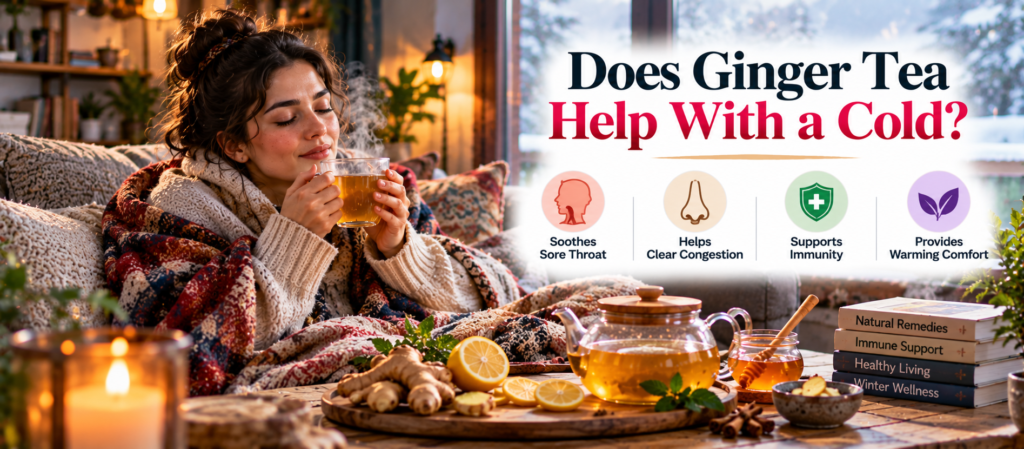
Ginger tea is commonly enjoyed when people feel under the weather, but it is important to distinguish comfort from medical treatment.
A warm drink may feel soothing on an irritated throat and help you maintain fluid intake. However, there is not enough evidence to claim that ordinary ginger tea cures the common cold, eliminates a virus, or reliably shortens an illness.
Ginger has been studied for several health-related uses, but research findings vary by condition and by the form of ginger being studied. Findings involving concentrated supplements should not automatically be applied to a homemade cup of ginger tea.
For reliable background information, consult the US National Center for Complementary and Integrative Health’s overview of ginger and its safety and Johns Hopkins Medicine’s guide to ginger.
If you have a cold, focus on rest, adequate fluids, and appropriate care for your symptoms. Seek medical advice if symptoms are severe, worsening, persistent, or accompanied by warning signs such as difficulty breathing or chest pain.
Is It Safe to Drink Ginger Tea Every Day?
Many adults can enjoy ginger in ordinary food and beverage quantities, but individual tolerance varies. Drinking a stronger infusion or consuming concentrated ginger products is not necessarily better.
Keep these points in mind:
Start with a mild preparation: Use a small amount of ginger and adjust the flavour gradually.
Pay attention to discomfort: Ginger can cause abdominal discomfort, heartburn, diarrhoea, or irritation of the mouth and throat in some people.
Check medication concerns: If you take prescription medicines, particularly medicines that affect blood clotting, ask a healthcare professional whether regular use of ginger products is appropriate.
Seek advice during pregnancy or breastfeeding: Discuss medicinal or concentrated ginger use with a qualified healthcare professional rather than assuming every preparation is suitable.
Avoid replacing medical treatment: Ginger tea is a beverage, not a substitute for prescribed medicines or professional care.
For more information, refer to the National Center for Complementary and Integrative Health, which discusses both the available evidence and known safety considerations.
How to Choose a Ginger Tea Product
Homemade ginger tea gives you control over the ingredients, while a ready-made herbal tea can be convenient when you want a prepared blend.
Before buying a packaged herbal tea, check:
The complete ingredient list: Confirm which herbs and spices are included.
Preparation instructions: Follow the product’s actual brewing directions.
Ingredient suitability: Check for ingredients that may not suit your dietary needs or medications.
Product details: Review the pack size, storage instructions, manufacturer information, and applicable warnings.
Your reason for buying: Choose according to flavour, convenience, and verified product information rather than unsupported health promises.
Do not assume that every herbal tea labelled for cough and cold contains ginger. Different blends can have different formulations, so always inspect the actual ingredient list.
Yoga Chaitanya offers a Cough and Cold Relief Herbal Tea. If you are considering it, review the listed ingredients, product details, preparation instructions, and safety information to decide whether it suits your preferences. Its name should not be interpreted as a guarantee of medical relief.
Make Warm Ginger Tea Part of Your Cold-Weather Routine
Ginger tea for cold weather comfort is a simple way to enjoy a warm, aromatic drink when temperatures drop or when you want a quiet break during the day. With fresh ginger, hot water, and optional flavourings, you can prepare a cup that matches your personal taste.
Keep your expectations realistic: ginger tea can be comforting, but it is not a proven cure for a cold or flu. Choose ingredients carefully, consider any relevant safety concerns, and seek professional medical advice when needed.
If you prefer a ready-made herbal blend, explore Yoga Chaitanya’s Cough and Cold Relief Herbal Tea and review its actual ingredients and product information before deciding whether to purchase.
Frequently Asked Questions About Ginger Tea for Cold Weather Comfort
What is the easiest way to make ginger tea for cold weather comfort?
Add a few thin slices of washed fresh ginger to a cup of hot water. Cover and steep for approximately 5–10 minutes, then adjust the flavour with optional lemon or honey. Allow the drink to cool to a comfortable temperature before sipping.
Can I drink ginger tea in winter even if I am not sick?
Yes. Ginger tea can be enjoyed as an ordinary warm beverage during cold weather. You do not need to be ill to enjoy its flavour or include it in your daily routine.
Should I add lemon or honey to ginger tea?
Both are optional. Lemon adds citrus flavour, while honey adds sweetness. Choose according to your taste and dietary needs. Never give honey to a child younger than 12 months.
Does ginger tea prevent colds or flu?
Ginger tea has not been established as a reliable way to prevent colds or flu. Enjoy it as a beverage, but do not rely on it as a substitute for recommended preventive measures or medical advice.
Is fresh ginger better than dried ginger for tea?
Fresh and dried ginger can both be used to prepare a ginger-flavoured drink. Fresh ginger tends to provide a lively, aromatic flavour, while dried ginger may taste different and more concentrated. The best choice depends on the flavour you prefer and the preparation instructions you follow.
Can ginger tea cause heartburn?
Yes. Ginger can cause heartburn or other digestive discomfort in some people. If this happens, reduce the strength, stop drinking it, or speak with a healthcare professional if symptoms persist.
Can I drink ginger tea before bed?
You can choose to enjoy a mild cup in the evening if it suits you. However, ginger may trigger digestive discomfort in some people, so pay attention to your own response and avoid drinking it at a temperature that could burn your mouth.
Is packaged herbal tea the same as homemade ginger tea?
Not necessarily. Homemade ginger tea may contain only fresh ginger and water, while packaged herbal teas can include several herbs, spices, or other ingredients. Read the label to understand the actual formulation.
Need Help To Understand Certified Ginger Tea for Cold Weather Comfort
Learn how to make ginger tea for cold weather comfort with fresh ginger, optional lemon and honey, plus practical preparation and safety tips.

About the Author: Sukhvinder Singh Chaitanya
Sukhvinder Singh (Chaitanya) is an E-RYT 500 & YACEP yoga teacher with 20,000+ hours of experience across 40+ Yoga Teacher Training programs. He specializes in Ashtanga Vinyasa, Hatha, Yin Yoga, Yoga Therapy, Laughter Yoga, and Meditation. Founder of Yoga Chaitanya International Institute, he teaches students from India, Russia, Lebanon, Thailand, Taiwan, Bali and China. He shares his teachings through yoga philosophy blogs and his YouTube channels.