
Ashtanga vs Yin Yoga: A Complete Style Comparison
Ashtanga vs Yin Yoga: A Complete Style Comparison
-
Written By: Sukhvinder Singh (Chaitanya)
- Published On:
- Last Updated: August 6, 2026
Ashtanga vs Yin Yoga: Quick Overview
- Ashtanga is a dynamic, muscle-engaging practice with a fixed sequence; Yin is a slow, floor-based practice that applies mild, sustained stress to fascia, tendons, ligaments, and meridians rather than muscles.
- Ashtanga training tends to build sequence memory, breath-movement coordination, and confident, dynamic cueing.
- Yin training tends to build patient observation, functional adaptation, and comfort holding stillness and silence.
- Yin yoga is not the same as restorative yoga, even though both use longer holds and a slower pace.
- Neither style alone produces a complete teacher; depth of practice, supervised teaching, and honest feedback matter just as much as which style you choose.
Choosing between Ashtanga vs Yin Yoga becomes easier when you look beyond which practice you personally enjoy and compare what each style actually develops in a teacher. Ashtanga and Yin Yoga create very different physical, mental, and teaching experiences, and preference alone does not always reveal which approach will prepare you better for the students you hope to teach.
Ashtanga develops dynamic movement, muscular engagement, breath coordination, sequence memory, stamina, and the ability to guide an active class. Yin Yoga develops stillness, observation, functional adaptation, prop use, sensitive cueing, and the ability to work with fascia, connective tissue, and individual skeletal variation. Understanding Ashtanga vs Yin Yoga therefore requires more than comparing fast and slow practice.
This guide, “Ashtanga vs Yin Yoga: A Complete Style Comparison,” examines what each method builds in your personal practice and teaching ability. It compares pace, muscular effort, sequencing, anatomy, cueing, observation, classroom management, contraindications, active vs passive yoga, and dynamic vs restorative yoga. It also explains why enjoying a practice and teaching it competently are two different things.
The guide will help you understand Ashtanga vs Yin Yoga according to your teaching goals, physical background, preferred classroom environment, and the type of students you want to support. It also examines whether learning both Ashtanga and Yin Yoga can create a more versatile teacher and where each single-style approach may leave important gaps.
Table of Contents
What Is Ashtanga Yoga?
You move through the sequence using ujjayi breath, bandha engagement, and a steady drishti, or gaze point. Your muscles stay actively engaged throughout, contracting and releasing as you transition from one posture to the next.
Traditionally, the practice is taught Mysore-style, where you work through the sequence at your own pace under a teacher’s individual observation, rather than only following a led class.
It’s worth pausing on the word “Ashtanga” itself. In Patanjali’s Yoga Sutras, ashtanga means eight limbs, referring to the broader eight-limbed path of yoga that includes ethical observances, breath control, and meditation alongside physical postures.
The modern practice of Ashtanga Vinyasa is one specific expression of that older word, not its full meaning.
Need Help Choosing Between Ashtanga and Yin Yoga?
Share your details to get simple guidance on which country may suit your retreat intention, travel timing, practice style, and comfort level.
What Is Yin Yoga?
Unlike Ashtanga, Yin does not actively engage the muscles at all. You keep the muscles relaxed in a pose, which allows mild, sustained stress to reach the deeper connective tissue instead of being absorbed by muscular effort.
This mild stress is held for several minutes at a time, targeting the fascia, tendons, ligaments, and joint capsules, the tissues that surround and stabilize your muscles and bones. Because connective tissue is less elastic than muscle, it responds to time and steady load rather than repetition.
In lineages that follow Sarah Powers’ teaching, this same stillness is also described as supporting the meridians, the pathways through which “Chi” or “Qi”, or subtle energy, is said to move according to Taoist theory.
Where Ashtanga strengthens and conditions muscle, Yin works at a slower, deeper layer of the body, one that only responds to time and stillness rather than repetition or muscular effort.
| Origin Factor | Ashtanga | Yin |
|---|---|---|
|
Key teacher(s) |
Sri K. Pattabhi Jois
|
Paul Grilley, Sarah Powers |
|
Structural basis |
Fixed Primary Series (Yoga Chikitsa) |
Theme-based, flexible sequencing
|
|
Traditional teaching format
|
Mysore-style, self-paced |
Led, teacher-guided holds |
|
Tissue engaged
|
Muscles, actively |
Fascia, tendons, ligaments, meridians |
|
Conceptual root |
Vinyasa krama, tristhana |
Functional anatomy, meridian theory |
What Is the Main Difference Between Ashtanga and Yin Yoga?
| Factor | Ashtanga | Yin |
|---|---|---|
|
Pace |
Continuous and dynamic |
Slow and still
|
|
Sequence |
Fixed, progressive series
|
Theme-based, flexible sequencing
|
|
Breath
|
Structured breath-movement coordination typically Ujjayi breathing |
Natural, softly directed |
|
Pose duration
|
A few breaths per posture (5 to 7 Ujjayi Breath) |
Several minutes per posture |
|
Muscular engagement
|
Active and sustained |
Relaxed, intentionally disengaged |
|
Tissue targeted |
Muscles |
Fascia, tendons, ligaments, meridians
|
|
Props |
Secondary, used for modification |
Often central to the pose, to make pose comfortable for long hold
|
|
Cueing style
|
Concise, rhythmic, movement-based |
Spacious, sensory, reflective |
|
Observation focus |
Rapid assessment during movement
|
Sustained observation during stillness |
|
Main teaching challenge |
Maintaining safe rhythm and transitions
|
Reading appropriate sensation and timing |
This is also where most Ashtanga vs Yin Yoga comparisons stop, at the level of pace and posture. But the more useful question for a trainee teacher is what each difference demands of you once you’re the one leading the room.
Is Ashtanga vs Yin Yoga the Same as Active vs Passive Yoga?
But passive doesn’t mean effortless, and active doesn’t automatically mean advanced. A Yin practitioner holding a long stretch still has to stay attentive to sensation, breath, and timing. An Ashtanga practitioner can move through a sequence on autopilot without much internal awareness at all.
| Active vs Passive Dimension | Ashtanga (Active) | Yin (Passive) |
|---|---|---|
|
Muscular effort |
Continuous engagement |
Intentionally released
|
|
Movement frequency
|
High
|
Very low |
|
Teacher’s role |
Directing, demonstrating, adjusting |
Observing, holding space, demonstrating
|
|
Mental attention required
|
Continuous, movement-focused |
Continuous, sensation-focused |
Does Dynamic vs Restorative Yoga Describe the Difference Between Ashtanga and Yin?
Ashtanga is a dynamic and muscle-engaging practice. The muscles contract, stabilise, lengthen, and release as the practitioner moves through a structured sequence. This active work supports strength, stamina, coordination, joint stability, and breath–movement rhythm.
Yin Yoga follows a passive-load approach. Once the posture is established, deliberate muscular engagement around the target area is released. Gravity, body weight, or carefully placed props then apply mild, sustained stress to the fascia, ligaments, joint capsules, and other connective tissues.
Within the traditional Chinese medicine framework used in Yin Yoga, postures may also be associated with meridian pathways and the circulation of qi. The intention is not forceful stretching. The practitioner remains within a manageable range and gives the tissues time to respond.
Restorative Yoga has a different purpose. Bolsters, blankets, blocks, belts, chairs, and walls are used to support the body so that unnecessary muscular holding and deliberate stretching are minimised. The main objective is not connective-tissue loading but physical ease, sensory quietness, and nervous-system rest.
| Factor | Ashtanga Yoga | Yin Yoga | Restorative Yoga |
|---|---|---|---|
|
Practice approach
|
Dynamic and movement-led |
Passive-load and stillness-based |
Support-led and rest-based |
|
Muscular effort
|
Active and sustained |
Intentionally released around the target area |
Reduced as fully as the setup allows
|
|
Primary physical focus |
Muscles, coordination, stability, and cardiovascular endurance |
Fascia, ligaments, joint capsules, and connective tissues |
No specific tissue is deliberately loaded
|
|
Source of physical load |
Muscular action, body weight, and repeated movement |
Gravity, body weight, time, and position
|
Load is reduced through external support |
|
Stretch sensation
|
Occur during movement and held postures |
Mild to moderate and sustained |
Little or no deliberate stretch sensation |
|
Typical hold time |
Usually a few breaths |
Commonly 3–5 minutes |
Commonly 5–20 minutes
|
|
Use of props |
Usually limited or used for modification
|
Used to regulate direction and intensity |
Central to supporting the entire body |
|
Primary intention |
Strength, stamina, rhythm, and disciplined movement |
Connective-tissue stress, stillness, and energetic observation |
Deep rest, recovery, and reduced physical effort |
|
Teacher’s main task |
Guide movement, breath, alignment, and transitions |
Regulate sensation, duration, target area, and alternatives |
Arrange complete support and remove hidden effort |
Which Teaching Skills Does Ashtanga Yoga Training Build?
Which Teaching Skills Does Yin Yoga Training Build?
Why Does Personal Yoga Practice Ability Differ From Ashtanga or Yin Teaching Ability?
| Trained In | May Be Strong At | May Still Struggle With |
|---|---|---|
|
Ashtanga (practice-heavy)
|
Advanced postures, personal sequence flow |
Observing beginners, giving concise instructions, adapting for mixed levels |
|
Yin (practice-heavy) |
Long, comfortable holds |
Identifying harmful vs productive sensation, prop placement, building coherent sequences |
Teacher Competency Comparison: Ashtanga vs Yin Yoga Training at a Glance
| Teaching Competency | Ashtanga Contribution | Yin Contribution |
|---|---|---|
|
Sequence memory
|
Strong |
Moderate
|
|
Breath-movement cueing
|
Strong |
Limited |
|
Dynamic transition cueing
|
Strong |
Low |
|
Observation during movement |
Strong
|
Moderate |
|
Observation during stillness |
Moderate
|
Strong |
|
Functional adaptation
|
Moderate |
Strong |
|
Prop use
|
Moderate |
Strong |
|
Silence and pacing management
|
Moderate |
Strong |
|
Demonstration skill
|
Strong |
Moderate |
|
Independent sequencing |
Can be limited by reliance on a fixed series
|
Usually developed more directly |
Notice that the two columns rarely overlap in their strongest rows; that’s the clearest evidence that this comparison isn’t about which style is “better,” but about which specific muscles of teaching, so to speak, each one exercises.
If you already know you want to lead energetic, movement-focused classes, weight your training toward Ashtanga’s strengths. If you’re drawn to slower, more individualized teaching, weight it toward Yin’s. If you’re not yet sure, that uncertainty is itself a reason to look closely at both columns before committing.
What Can Ashtanga-Trained and Yin-Trained Yoga Teachers Each Overlook?
Training narrowly in one style tends to create specific blind spots. Naming them honestly is more useful than pretending either path is complete on its own.
| Style | Common Blind Spot |
|---|---|
|
Ashtanga-dominant training |
Treating intensity as progress, or giving the same modification to different bodies
|
|
Ashtanga-dominant training
|
Demonstrating continuously instead of observing students closely |
|
Yin-dominant training
|
Treating every long-held stretch as automatically “Yin,” or confusing Yin with restorative yoga |
|
Yin-dominant training
|
Underdeveloped skill in cueing transitions, pacing, or leading active movement safely |
Recognizing these gaps early, during training rather than after certification, saves both time and your future students some avoidable trial and error.
How Do Ashtanga and Yin Yoga Training Prepare Teachers for Real Classroom Situations?
| Classroom Situation | Ashtanga-Trained Instinct | Yin-Trained Instinct |
|---|---|---|
|
Complete beginner group |
Simplify transitions and pacing
|
Ease students into unfamiliar stillness |
|
Mixed-level studio class |
Maintain a coherent group rhythm
|
Individualize prop use and pacing |
|
Older students, limited mobility
|
Adapt modifications with care |
Observation and adaptation transfer naturally |
|
Physically active group
|
Meet and safely challenge intensity |
May need extra confidence leading pace |
|
Fatigued evening group |
May default to a gentler dynamic practice
|
May default to a full Yin sequence, not always needed |
The more training you have across both approaches, the more of these situations you’ll be ready for without having to guess in the moment.
What Are the Limitations of Training in Only Ashtanga or Only Yin Yoga?
| Training Path | Likely Strength | Likely Gap |
|---|---|---|
|
Ashtanga-only |
Structured, dynamic flow classes
|
Holding a slow, restorative-feeling session; deep one-on-one modification work |
|
Yin-only |
Deep, reflective stillness |
Safely cueing fast transitions; managing an active group’s energy
|
This is a useful, if uncomfortable, question to ask before you enroll in any single-style program: what will this training leave me underprepared for, and am I comfortable filling that gap later on my own? Some teachers are, and close the gap through years of continuing education. Others would rather address it from the start.
Can Ashtanga and Yin Yoga Training Be Combined for a More Versatile Teacher?
A program that briefly touches both styles without going deep into either can leave you with surface-level familiarity that doesn’t hold up in a real classroom.
Done properly, though, combined training gives you the dynamic sequencing confidence of Ashtanga alongside the observational patience of Yin. That combination is genuinely useful for teaching the mixed-level, mixed-need classes most working teachers actually lead.
What Safety and Contraindication Awareness Should Every Ashtanga and Yin Teacher Have?
This matters particularly in Yin, where prolonged loading of connective tissue requires real judgment about appropriate sensation. It matters in Ashtanga too, where the physical intensity of the sequence requires careful pacing for injury prevention.
Fascia and connective tissue research consistently emphasizes that connective tissue adapts to mechanical loading, similar to other musculoskeletal tissues, but that appropriate loading requires accounting for individual variation. That’s exactly the kind of judgment a teacher trained in either style needs to develop with care, not assume they already have.
This is one more reason the Ashtanga vs Yin Yoga comparison shouldn’t be reduced to pace or flexibility alone. Whichever style you train in, the training itself should include enough anatomy and safety education that you can make sound, individualized decisions in the room.
Does Ashtanga or Yin Yoga Ultimately Build a Better Yoga Teacher?
| Question | Honest Answer |
|---|---|
|
Does Ashtanga build better teachers than Yin? |
Not universally; it builds stronger dynamic-method skills
|
|
Does Yin build better teachers than Ashtanga? |
Not universally; it builds stronger observation and adaptation skills
|
|
What actually determines teaching quality? |
Depth of practice, anatomy knowledge, supervised teaching hours, feedback, adaptability |
What Has Yoga Chaitanya Observed About Ashtanga and Yin Yoga Training?
I structure both pathways to go beyond surface-level style familiarity. Both include dedicated time for anatomy, supervised practicum teaching, and feedback, since style knowledge alone doesn’t produce classroom-ready teachers.
Graduates of these programs have described the training’s approach to teaching technique and posture adjustment as a turning point for their confidence, and have specifically credited the program’s methods for helping them move past the fear of teaching in front of a room.
Others who came through the Yin-focused pathway have described it as deepening their understanding of Yin far beyond the postures themselves, into applied meditation they could bring into daily life.
| What Students Report | Training Pathway |
|---|---|
|
Stronger sequencing discipline, confident dynamic cueing |
Ashtanga Vinyasa and Yin training
|
|
Calmer, more observational teaching presence |
Yin and meditation-based TTC
|
|
Reduced fear of teaching, stronger adjustment skills |
Both, credited to supervised practicum structure
|
Which Ashtanga and Yin Yoga Teacher Training Pathways Are Available?
Both are offered as residential yoga training in India through immersive yoga programs in Goa and the Himalayas. The residential setting supports the kind of sustained, supervised practice that builds real teaching competence rather than surface familiarity.
Is Ashtanga or Yin yoga better for a first teacher training?
Is Yin yoga the same as restorative yoga?
Can I combine Ashtanga and Yin yoga teacher training?
Do I need to be very flexible to start Ashtanga or Yin training?
Which style is more physically demanding to teach?
Is Ashtanga teacher training too intense for beginners?
Where is the best place to train in both Ashtanga and Yin yoga?
Does Ashtanga yoga count as "yang" and Yin yoga as "yin" in a strict energetic sense?
Will Yin yoga training help me if I already teach a dynamic style?
Need Help Choosing Between Ashtanga and Yin Yoga?
Share your details to get simple guidance on which country may suit your retreat intention, travel timing, practice style, and comfort level.
Conclusion
Understanding Ashtanga vs Yin Yoga becomes easier when you focus on the kind of teacher and classes you want to develop.
Choose Ashtanga if you want to build dynamic cueing, sequence memory, stamina, discipline, and breath–movement coordination.
Choose Yin Yoga if you want to develop observation, adaptation, prop use, stillness, and a deeper understanding of fascia, connective tissue, and individual variation.
Learning both styles may help you teach a wider range of students, but only when each method is studied with enough depth, anatomy, practice, and supervised teaching.
The right choice between Ashtanga vs Yin Yoga is not simply the style you enjoy most. It is the one that best develops the teaching skills you need.
I hope this guide helped you understand the main differences between Ashtanga vs Yin Yoga. If you have a question, leave a comment below.
From Comparing Styles to Choosing the Right Training
Understanding Ashtanga vs Yin Yoga becomes more useful when you connect the differences with the teaching skills you want to develop. Ashtanga builds strength, sequencing discipline, breath–movement coordination, and dynamic cueing, while Yin develops stillness, observation, and functional adaptation.
At Yoga Chaitanya, our Ashtanga Yoga Teacher Training combines structured Ashtanga Vinyasa practice with Yin Yoga, anatomy, philosophy, pranayama, meditation, teaching methodology, and supervised practicum. The training is designed for students who want to deepen their personal practice and learn how to teach active and passive yoga methods responsibly.
Build a Strong Practice. Learn to Teach with Clarity.
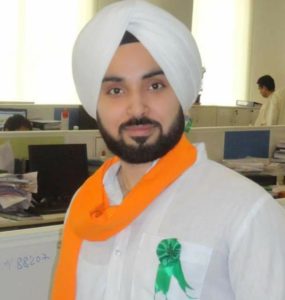
About the Author: Sukhvinder Singh Chaitanya
Sukhvinder Singh (Chaitanya) is an E-RYT 500 & YACEP yoga teacher with 20,000+ hours of experience across 40+ Yoga Teacher Training programs. He specializes in Ashtanga Vinyasa, Hatha, Yin Yoga, Yoga Therapy, Laughter Yoga, and Meditation. Founder of Yoga Chaitanya International Institute, he teaches students from India, Russia, Lebanon, Thailand, Taiwan, Bali and China. He shares his teachings through yoga philosophy blogs and his YouTube channels.