
Yoga Teacher Training Residential Life: What to Expect
-
Written By: Sukhvinder Singh (Chaitanya)
- Published On:
- Last Updated: October 27, 2026
Yoga teacher training residential life is an immersive learning experience in which students practise yoga, study its philosophy, develop teaching skills, and live alongside fellow trainees. Unlike a course that requires daily commuting, residential training brings learning, practice, and daily routines together in one environment.
For students considering yoga teacher training in Goa, India, understanding residential life before enrolling can help them prepare for the course’s schedule, accommodation, meals, study commitments, and community environment.
Whether you are travelling from the United States, the United Kingdom, Canada, Germany, Singapore, or another country, knowing what to expect can help you decide whether residential yoga teacher training fits your lifestyle and learning goals.
What Is Residential Life During Yoga Teacher Training?
Residential life during yoga teacher training means staying in accommodation associated with the training programme while attending scheduled classes and participating in the learning environment.
A typical residential experience may include:
Morning yoga practice, meditation, or breathing exercises.
Classes covering yoga philosophy, anatomy, alignment, and teaching methodology.
Practical workshops and teaching exercises.
Independent study, reflection, and preparation.
Shared meals and opportunities to interact with other students.
Time for rest and personal activities, depending on the course schedule.
The exact experience varies between schools and programmes. Before booking, confirm the actual timetable, accommodation arrangements, course requirements, and inclusions for your chosen training dates.
Table of Contents
What Does a Typical Day Look Like?
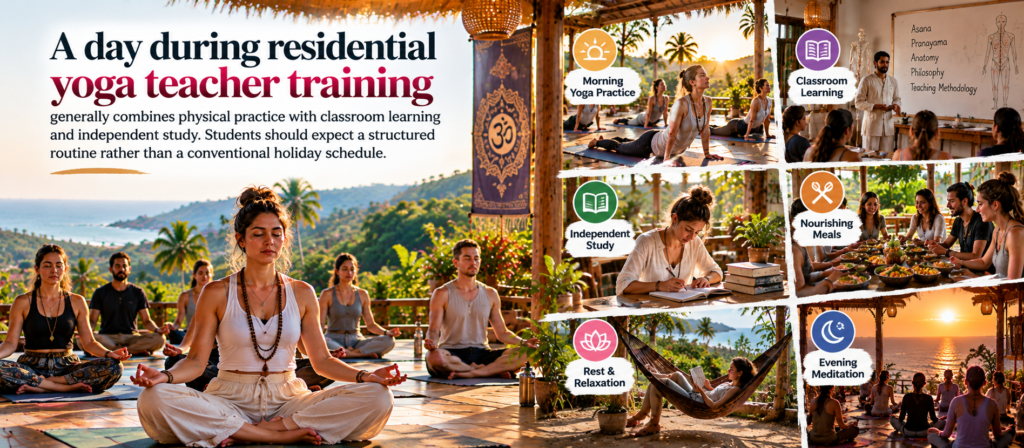
A day during residential yoga teacher training generally combines physical practice with classroom learning and independent study. Students should expect a structured routine rather than a conventional holiday schedule.
| Part of the day | Possible activities |
|---|---|
| Morning | Meditation, pranayama, and yoga asana practice |
| Late morning | Yoga philosophy, anatomy, alignment, or methodology |
| Afternoon | Practical workshops, teaching exercises, or guided study |
| Evening | Personal practice, reflection, discussion, or rest |
This table illustrates a general residential training routine, not a confirmed Yoga Chaitanya timetable. Daily activities and timings depend on the specific programme.
Some days may feel more demanding than others. Students may need to practise sequences, review notes, prepare teaching sessions, or work on assignments outside formal classroom hours.
Understanding this commitment before enrolling helps you arrive with realistic expectations and manage your time more effectively.
Life Beyond the Yoga Classroom
One of the defining aspects of residential yoga teacher training is the opportunity to continue learning outside scheduled lessons.
Living alongside other trainees can create opportunities to exchange ideas, discuss yoga philosophy, ask questions, and reflect on different approaches to practice. Students may come from different countries and professional backgrounds, bringing varied perspectives to group discussions and shared activities.
Residential life can also encourage greater awareness of everyday habits. Following a structured routine may help students pay closer attention to rest, time management, consistency, and their approach to learning.
However, residential training requires active participation. It involves more than attending yoga classes; students must engage with the curriculum, practise regularly, accept feedback, and take responsibility for their learning.
Accommodation During Residential Yoga Teacher Training
Accommodation is an important part of the residential yoga teacher training experience. The type of room, available facilities, privacy, and distance from the classroom can influence your comfort during the programme.
Before confirming a booking, ask the school:
Is accommodation included in the advertised course fee?
Are shared and private rooms available?
What facilities are provided?
Is the accommodation within walking distance of the practice and classroom areas?
Are bedding, laundry, drinking water, and other essentials provided?
Are there additional charges for particular room types or facilities?
What are the check-in and check-out arrangements?
Do not assume that all residential yoga schools provide identical facilities. Confirm the specific arrangements for your selected course and travel dates in writing.
For international students, it is also helpful to clarify arrival instructions and local transport options before departure.
Need Help To Understand Certified Yoga Teacher Training Residential Life
Discover daily routines, accommodation, meals, study commitments, and practical tips for Yoga Teacher Training Residential Life in Goa, India.
Meals and Daily Living
Meal arrangements can affect your comfort, energy, and ability to follow the training schedule. Some residential programmes provide meals as part of a package, while others may have different arrangements.
Before enrolling, confirm how many meals are included, what food is served, and whether dietary requirements can be accommodated. If you have food allergies or specific dietary needs, communicate them to the school in advance rather than assuming suitable alternatives will be available.
You should also ask about drinking water, nearby shops, access to essential supplies, and any practical arrangements that could affect your stay.
Planning these details before arrival allows you to focus more fully on your training.
Is Residential Yoga Teacher Training Physically and Mentally Demanding?
Residential yoga teacher training can be demanding because it combines practical sessions, theoretical study, teaching exercises, and a structured daily routine.
The level of challenge depends on the course format, its requirements, your previous yoga experience, and how you manage rest and study time.
You do not need to treat the course as a competition. Focus on understanding the material, developing your practice gradually, asking questions, and responding constructively to instructor feedback.
If you experience pain or have concerns about participating in particular practices, communicate with your instructor and seek appropriate guidance. Do not assume that pushing through pain is necessary for progress.
Before enrolling, review the programme’s prerequisites and discuss any concerns with the school so you can determine whether the course is suitable for you.
How Much Free Time Do Students Get?
The amount of personal time available during residential yoga teacher training depends on the course timetable, attendance requirements, and independent study workload.
Some programmes may provide time for rest, reading, journaling, or exploring the local area. Other periods may be more intensive, particularly when students are preparing for assessments or teaching practice.
Avoid assuming that every afternoon, evening, or weekend will be free. Request the current timetable and ask how independent study, days off, and optional activities are organised.
If you work remotely or have family responsibilities, discuss your needs with the school before booking. A structured training programme may offer less flexibility than your usual daily routine.
Preparing for Residential Yoga Teacher Training in Goa
Travelling to Goa for yoga teacher training requires preparation beyond packing yoga clothes. Students should understand their travel arrangements, accommodation details, course expectations, and personal requirements before arriving.
Use this checklist before departure:
Confirm the programme dates and arrival time.
Verify your accommodation booking and room arrangement.
Check transport options from your arrival point.
Review the school’s packing recommendations.
Ask about meals, dietary requirements, and drinking water.
Understand attendance requirements and the daily schedule.
Review payment, cancellation, and refund terms.
Check the travel-document and entry requirements that apply to your nationality.
Arrange any essential medication and personal supplies.
Confirm internet availability if you need to manage work or personal commitments.
Goa’s climate and local conditions may differ from those at home. Check the forecast for your travel dates and pack suitable clothing and personal essentials.
Giving yourself enough time to arrive, settle in, and understand the surroundings can make the transition into residential life easier.
What Should You Pack?
A practical packing list helps you prepare without bringing unnecessary items.

Yoga and study essentials
Comfortable clothing suitable for yoga practice.
A reusable water bottle.
A notebook and pens.
Any yoga equipment specified by the school.
Comfortable clothing for daily activities and rest.
Personal essentials
Toiletries and personal-care products.
Regular medication, where applicable.
Travel documents and booking confirmations.
Suitable footwear and weather-appropriate clothing.
Chargers and essential electronic devices.
Check the school’s recommendations before purchasing equipment. Some items may already be available at the training venue, while others may need to be brought from home.
How to Choose the Right Residential Yoga Teacher Training Programme
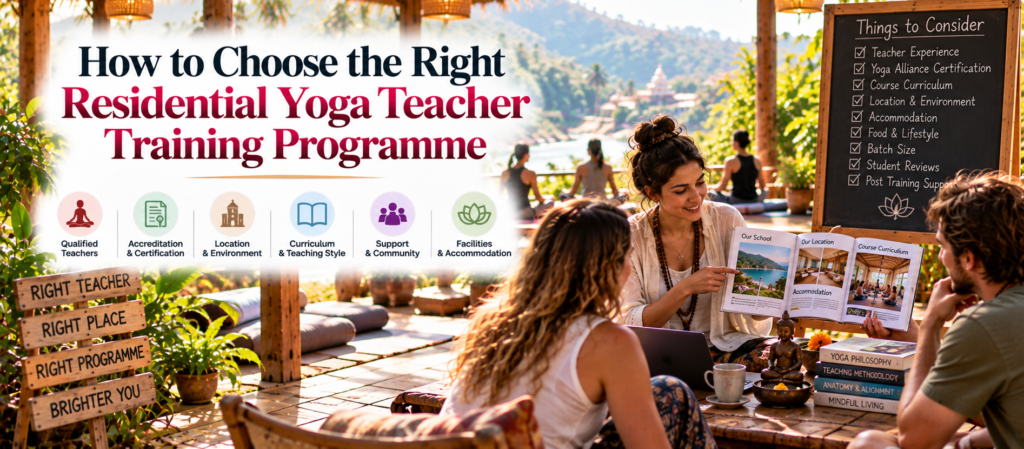
Choosing a residential programme involves more than selecting a destination. The curriculum, teaching approach, schedule, accommodation, total cost, and level of support should all match your needs.
Use the following checklist to compare programmes.
1. Review the curriculum
Understand which subjects are taught, how practical learning is organised, and what teaching practice or assessments are required.
2. Check the daily schedule
Ask for the current timetable and make sure you understand the time commitment, attendance rules, and independent study expectations.
3. Confirm accommodation and meals
Clarify what is included in the fee, which room options are available, and whether meals and dietary requirements are covered.
4. Verify instructor information
Review the instructors’ relevant qualifications and teaching experience. Verify any claimed credentials or affiliations directly.
5. Understand certification
Ask who issues the certificate, what the course includes, and whether any additional requirements apply. Do not assume that completing one course automatically provides every professional qualification or registration you may need.
6. Ask about student support
Find out whom you can contact about course questions, accommodation concerns, or practical adjustments during your stay.
7. Read the terms and conditions
Review payment schedules, cancellation rules, refund policies, and any additional charges before committing.
A careful comparison helps you make an informed decision based on the actual programme rather than promotional language alone.
Is Residential Yoga Teacher Training Right for You?
Residential yoga teacher training may be suitable if you want a structured learning environment, regular practice, direct interaction with instructors, and opportunities to learn alongside other trainees.
It may also appeal to students who prefer having their accommodation and learning environment organised around the training programme.
A non-residential course may be more appropriate if you need to return home each day, maintain significant outside commitments, or prefer greater control over your daily schedule.
Neither option is automatically better for everyone. Consider your learning goals, personal responsibilities, budget, previous experience, and the practical arrangements offered by the school.
The right choice is the programme that fits your circumstances and provides clear information about what you will be expected to do.
Explore Yoga Teacher Training in Goa, India
If you are considering a residential yoga teacher training programme in Goa, start by reviewing the course structure, upcoming dates, accommodation arrangements, and enrolment requirements.
Explore the Yoga Teacher Training in Goa, India programme and review the upcoming yoga training schedule for programme information.
Before booking, make sure you understand what the course includes and whether its schedule and living arrangements suit your needs. An informed decision can help you approach your training with realistic expectations and a clear understanding of the experience.
Frequently Asked Questions About Yoga Teacher Training Residential Life
What is yoga teacher training residential life like?
Yoga teacher training residential life generally combines daily yoga practice, classroom learning, teaching exercises, independent study, meals, rest, and interaction with fellow trainees. The exact routine depends on the school’s programme and schedule.
Is accommodation included in residential yoga teacher training?
Accommodation may be included in the course fee or offered separately, depending on the programme. Confirm room types, facilities, booking dates, and additional costs directly with the school.
Are meals provided during residential yoga teacher training?
Meal arrangements vary by programme. Ask how many meals are included, what food is served, and whether your dietary requirements can be accommodated.
Is residential yoga teacher training suitable for beginners?
Eligibility depends on the individual course. Some programmes accept students with limited experience, while others require a particular level of prior practice. Review the prerequisites before enrolling.
Will I have free time during residential training?
Personal time depends on the timetable, coursework, and attendance requirements. Request a current schedule before making travel, work, or sightseeing plans.
Can international students attend yoga teacher training in Goa?
International students can explore programmes in Goa, but eligibility, travel documents, entry requirements, and practical arrangements depend on their circumstances. Check the applicable official travel guidance and confirm the school’s enrolment requirements before booking.
What should I check before booking a residential yoga course?
Review the curriculum, daily schedule, accommodation, meals, total cost, instructor information, certification details, attendance requirements, and cancellation policy. Ask the school to clarify anything that is not explicitly stated.
Need Help To Understand Certified Yoga Teacher Training Residential Life
Discover daily routines, accommodation, meals, study commitments, and practical tips for Yoga Teacher Training Residential Life in Goa, India.

About the Author: Sukhvinder Singh Chaitanya
Sukhvinder Singh (Chaitanya) is an E-RYT 500 & YACEP yoga teacher with 20,000+ hours of experience across 40+ Yoga Teacher Training programs. He specializes in Ashtanga Vinyasa, Hatha, Yin Yoga, Yoga Therapy, Laughter Yoga, and Meditation. Founder of Yoga Chaitanya International Institute, he teaches students from India, Russia, Lebanon, Thailand, Taiwan, Bali and China. He shares his teachings through yoga philosophy blogs and his YouTube channels.